
Blog
Most patients do not feel pain during LASIK because numbing eye drops are used before the procedure begins. What you may notice instead is mild pressure, a few unusual sensations, and some temporary discomfort for a few hours after surgery.
If you are wondering what LASIK feels like, you are not alone. Many people want to know what happens when the drops go in, whether the laser can be felt, and what recovery feels like afterward.
This blog walks through each stage of the procedure so you know what to expect during LASIK and in the first few hours after surgery.
Does LASIK Hurt During Surgery?
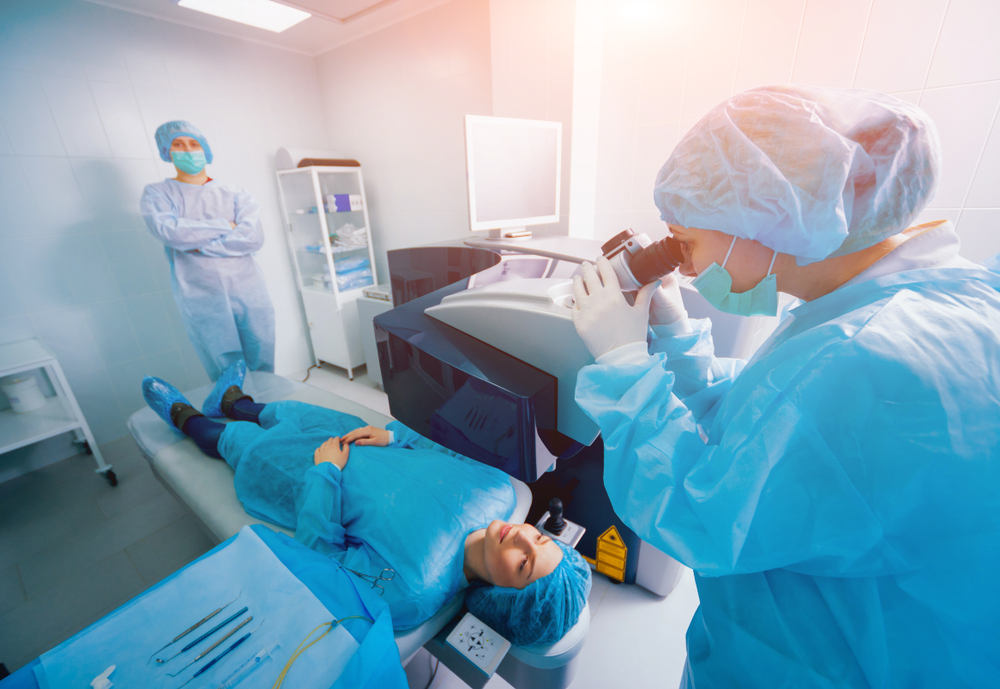
LASIK does not hurt the way you are probably picturing it. There is no cutting sensation, no sharp pain, and no burning. What you will feel instead is pressure, brief and contained, during one specific moment of the procedure.
Patients consistently describe it as more strange but not painful. The reason this matters is that pressure and pain trigger very different responses in your body. Sharp pain makes you flinch. Pressure does not. Also, before any laser touches your eye, your eye doctor will instill numbing drops that ensure you won’t feel anything during the procedure.
What the Numbing Drops Actually Do
Numbing drops are one of the first steps in the LASIK procedure. Some people notice a brief sting when the drops go in, similar to irritation from a contact lens. Within seconds, the surface of the eye becomes numb.
You may also be offered a mild sedative to help you relax, but it does not put you to sleep. The care team at LASIK Vision Centers of Cleveland walks you through every step of the procedure and pre-op preparation, so you know what to expect before, during, and after surgery.
What Does LASIK Feel Like When the Flap Is Created?
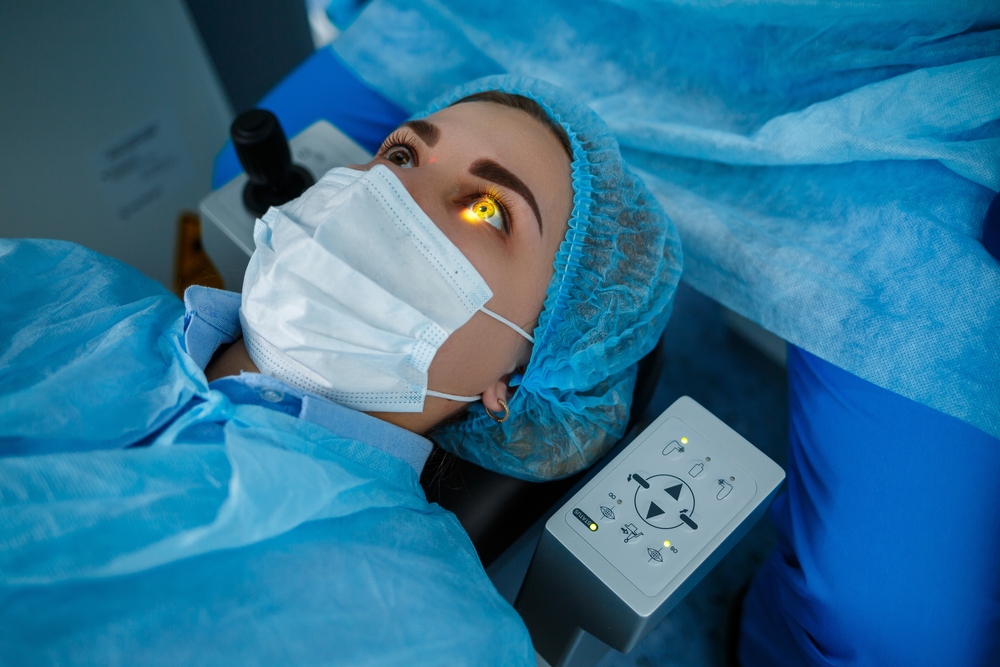
This is the moment most patients spend the most time worrying about beforehand, and almost no time thinking about afterward. Here is what actually happens.
A small device makes contact with the surface of your eye to hold it steady. You feel pressure, like when you press a finger against a closed eyelid. The femtosecond laser is creating the corneal flap during this window, working in pulses so fast they are measured in quadrillionths of a second. You do not feel the laser itself. You feel the device touching your eye and the pressure it creates.
The reason patients today report so much less discomfort than patients did twenty years ago is the technology. The bladeless femtosecond laser technology used at LASIK Vision Centers of Cleveland creates the flap without a mechanical blade, which is gentler on the surrounding tissue and produces a more uniform result. This phase lasts about twenty seconds per eye.
What You Feel During the Reshaping Phase
After the flap is created, the chair rotates to the second laser. The surgeon will ask you to look at a small green light directly above you. You may notice a faint clicking sound as the laser fires. Some patients also notice a brief odor, which can be startling if no one warns you about it. It comes from the laser interacting with corneal tissue and does not mean anything is wrong. This phase lasts well under a minute per eye, often around twenty to thirty seconds for an average prescription.
What you see during this phase is its own subject worth knowing about. Many patients are surprised to learn that you cannot see the laser “coming toward” your eye at all.
What you see during this phase is its own subject worth knowing about. Many patients are surprised to learn that you cannot see the laser “coming toward” your eye at all. The visual experience during LASIK is mostly a soft green fixation light, some shifting shadows, and a gradual blur as the cornea is reshaped.
Does LASIK Hurt After Surgery?

Once the flap is repositioned and the surgeon confirms it has sealed, you are done. You will sit up slowly. Your vision will already be improved, though it will look hazy, similar to looking through a steamy shower door.
For the next three to six hours, your eyes will likely water heavily, feel gritty, and be sensitive to light. Some patients describe it as the feeling of having an eyelash stuck under the lid. This is the phase where the word “discomfort” earns its place. The eyes are irritated, and the feeling fades steadily as the surface heals. Most patients sleep through the worst of it. By the next morning, the gritty feeling is usually gone, and a follow-up appointment confirms the eyes are healing as expected.
Want to learn more about recovery and what comes after the procedure?
Ready to learn more about LASIK and determine if you might be a candidate? Schedule an appointment at LASIK Vision Centers of Cleveland in Cleveland, OH.