
Blog
If you’ve been considering LASIK, the first question on your mind is probably whether your eyes even qualify. Candidacy comes down to a set of factors a surgeon weighs together, not a single yes-or-no test. Some involve your eyes themselves. Others involve your overall health and what you reasonably expect from the procedure.
The only way to know with certainty is an in-person evaluation, but knowing the criteria in advance helps you arrive at the consultation with the right questions.
The five factors below cover what experienced surgeons at LASIK Vision Centers of Cleveland and at any reputable practice review before recommending the procedure.
1. Your Age and Prescription Stability
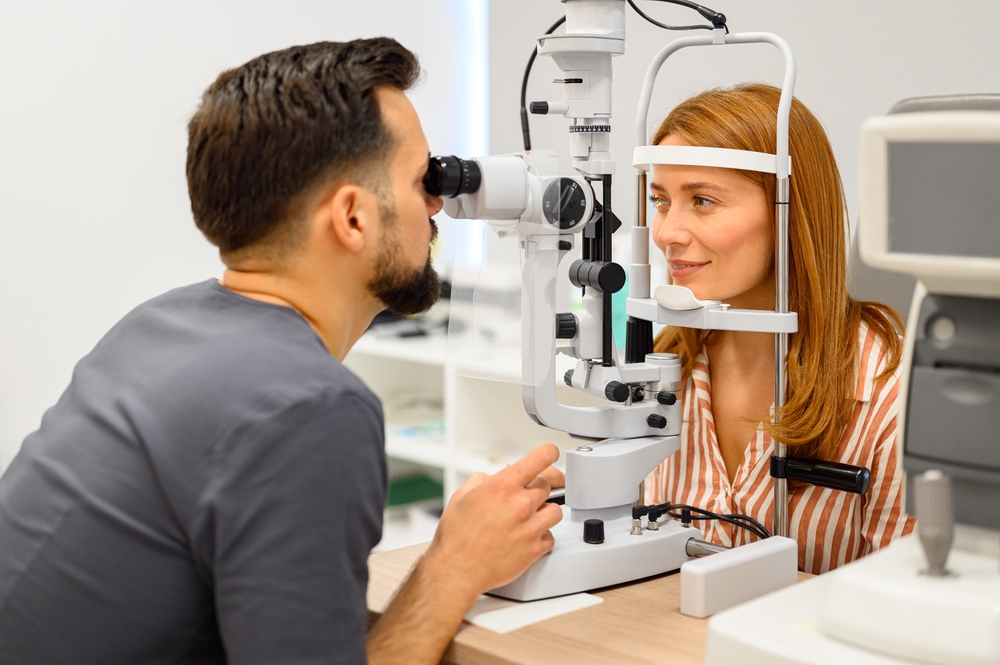
Most surgeons require patients to be at least 18 years old before considering LASIK. This is because vision continues to change through the teenage years, and a procedure that reshapes the cornea works best when the prescription it’s correcting is no longer shifting.
Beyond age, the prescription itself needs to be stable. The general benchmark is a year or more without a noticeable change in your glasses or contact lens prescription. If your eyes are still adjusting, LASIK results would likely drift as your underlying vision keeps changing. Patients in their early twenties sometimes see small shifts year to year, while patients in their thirties and forties are usually well past that point.
The team reviews several years of prescription history when available, since that record helps confirm whether a patient meets the standard candidacy criteria for LASIK.
2. Your Prescription Strength
LASIK is approved to treat nearsightedness, farsightedness, and astigmatism within a defined range. Most patients with mild-to-moderate prescriptions fall comfortably within that range and are good candidates from a strength standpoint. Very high prescriptions can be more complicated. The amount of corneal tissue a surgeon would need to reshape may not leave enough underneath for a safe outcome.
A high prescription doesn’t automatically rule out vision correction. Other procedures exist for patients whose numbers fall outside the LASIK range. The point of the candidacy evaluation is to match the right procedure to your specific prescription, not to force LASIK onto every patient who asks for it.
3. The Shape and Thickness of Your Corneas
LASIK works by reshaping the cornea, the clear front layer of the eye. That reshaping requires enough corneal tissue to safely remove a small amount, plus a regular, predictable corneal surface for the laser to work on. Surgeons measure both factors during the candidacy evaluation using detailed mapping technology.
Thin corneas are the most common reason patients are turned away from traditional LASIK. The cornea needs a baseline thickness so that enough tissue remains underneath the treated zone after surgery.
Irregular corneal shapes, including conditions like keratoconus or scarring from a prior eye injury, can also rule out LASIK.
If your corneas don’t meet the LASIK criteria, PRK is often the next conversation. PRK doesn’t create a corneal flap and so preserves more of the cornea’s structural depth, which makes it a workable option for patients whose corneas are too thin for LASIK.
4. The Overall Health of Your Eyes
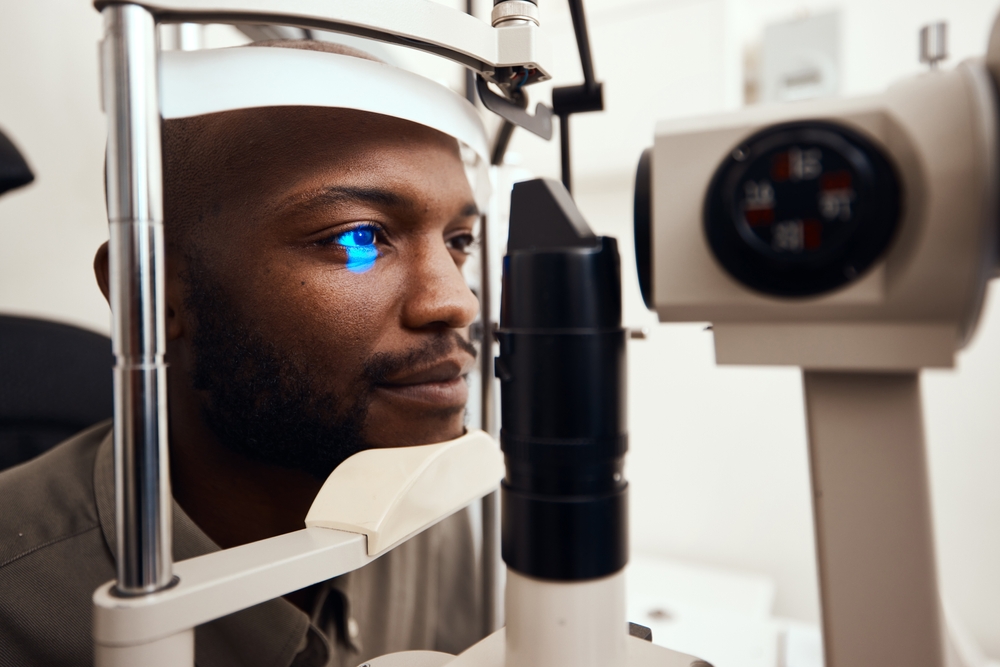
A good candidate for LASIK has eyes that are free of active disease or untreated conditions.
That doesn’t mean perfect eyes. Plenty of people who get LASIK have managed something like mild dry eye or seasonal allergies. It means the eyes need to be in a stable state before surgery.
Conditions that may delay or rule out LASIK include severe dry eye, untreated glaucoma, cataracts that have started to affect vision, active infections, and recent eye injuries. Some are temporary and resolvable, like an infection that clears with treatment. Others, like advancing cataracts, point a patient toward a different procedure entirely.
Severe dry eye is one of the more common reasons surgeons recommend a treatment plan before LASIK rather than after, since the surgery can briefly worsen dry eye symptoms during the healing window.
A thorough candidacy evaluation checks for all of these conditions. Both Dr. Greg Eippert, who has performed more than 50,000 vision correction procedures, and Dr. Carrie Happ-Smith examine the surface of the eye, measure tear production, and check pressure and overall ocular health before clearing a patient for LASIK.
5. Your General Health and Realistic Expectations
Some systemic health conditions affect how the eye heals after surgery. Uncontrolled autoimmune disease, poorly managed diabetes, and certain medications that suppress the immune system can delay healing or change the predictability of the outcome.
Pregnancy and nursing also temporarily disqualify a patient, since hormonal changes can shift the prescription. The recommendation in those cases is to wait until the body has returned to its baseline.
Beyond physical health, mindset matters as well. LASIK can deliver dramatic improvement, but it isn’t a permanent fix for every age-related vision change. Patients in their mid-forties and older typically start to lose the ability to focus on close objects regardless of LASIK, a normal change called presbyopia.
Knowing what LASIK will and won’t do is part of being a good candidate.
Get answers to common questions about presbyopia, reading vision, and what LASIK can correct at different ages.
What a Candidacy Evaluation Actually Involves
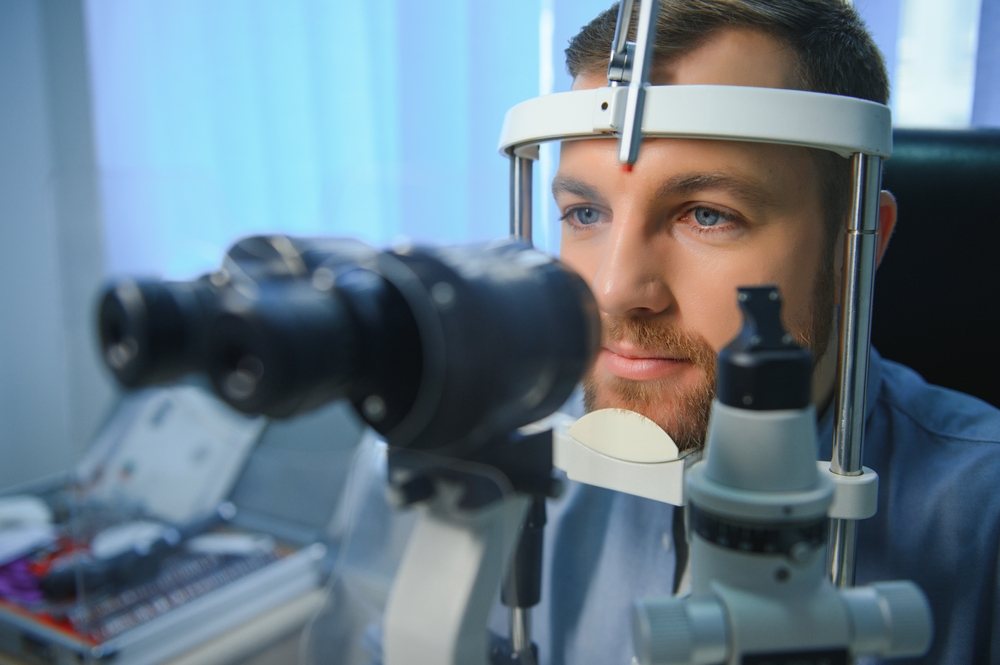
At LASIK Vision Centers of Cleveland, our team uses advanced corneal mapping, dry eye testing, and a detailed review of medical and ocular history to confirm whether a patient is ready for LASIK or would benefit from a different procedure. Patients who have been told elsewhere that they aren’t candidates sometimes find that newer technology or a different surgical approach changes the answer.
The full consultation experience at LASIK Vision Centers of Cleveland is free and ends with a clear answer about which procedure, if any, makes sense for your eyes. Whether you’ve been wearing glasses since middle school or recently started having trouble with contact lenses, the appointment gives you a precise picture of where you stand.
Ready to find out if LASIK is right for you? Schedule an appointment at LASIK Vision Centers of Cleveland in Cleveland, OH.